The Venue
A century of history. Two gardens unlike any other.
The history of Los Bates
8th century
The Arab farmstead
An important farmstead in Muslim times. It had a fortress, city wall, sugar factory, pool for soaking linen and the Bates Mill. An underground aqueduct still crosses the estate today.
1492
After the Conquest of Granada
The lands of Bates el Viejo were purchased by Francisco Ramírez de Madrid, Royal Secretary, Captain of Artillery and Count of Bornos. His descendants owned the property for several centuries.
18th century
The botanical garden
The Jiménez Caballero family acquired the property and built a mansion and botanical garden. Some of its plants were brought by General Hernández de Velasco, hero of the Cuba War.
1898
The colonial manor house
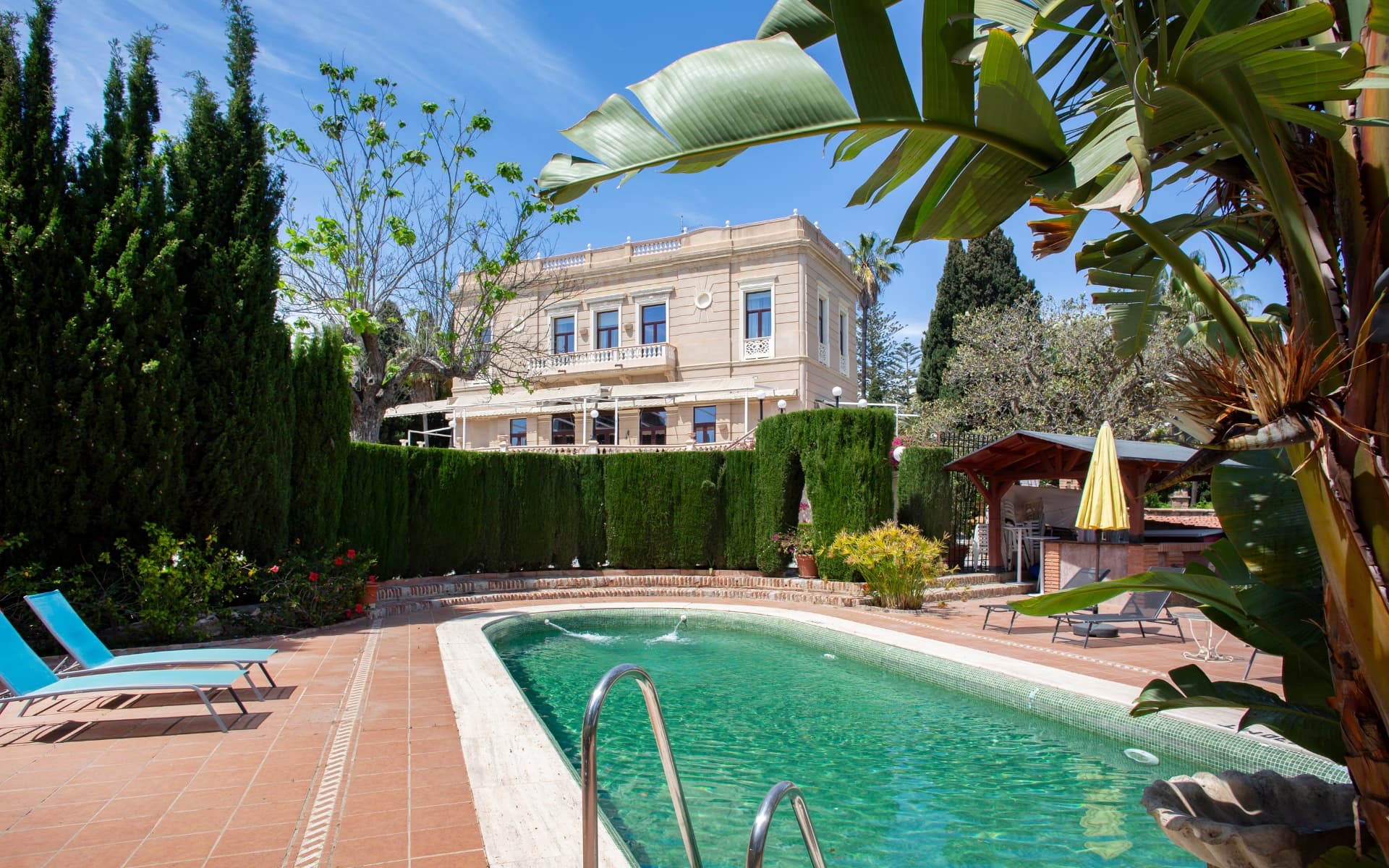
José Jiménez Caballero, Mayor of Motril and Member of Parliament, built the Italian-style colonial manor house. He created the Italian Romantic Garden (the Moonlight Garden) connected to the previous garden by a grand travertine marble staircase flanked by coral grottos. The ironwork is said to have been purchased from Gustave Eiffel.
20th century
Illustrious guests and abandonment
The estate hosted various personalities from politics and high society throughout the century. It was subsequently left completely abandoned.
1993
The restoration
Mariperta Martín Feriche purchased the estate in ruins and restored it with the help of her five children.
1998
Reopening
In its centenary year, after an intensive restoration, the house reopened as a rural retreat and venue for celebrations.
2006 · 2008
International recognition
Télva magazine named Casa de los Bates one of the ten most romantic places to marry in Spain (2006). Condé Nast named it among the five best guest houses in Europe, an award collected in London (2008).
The gardens
Botanical Garden — 18th century
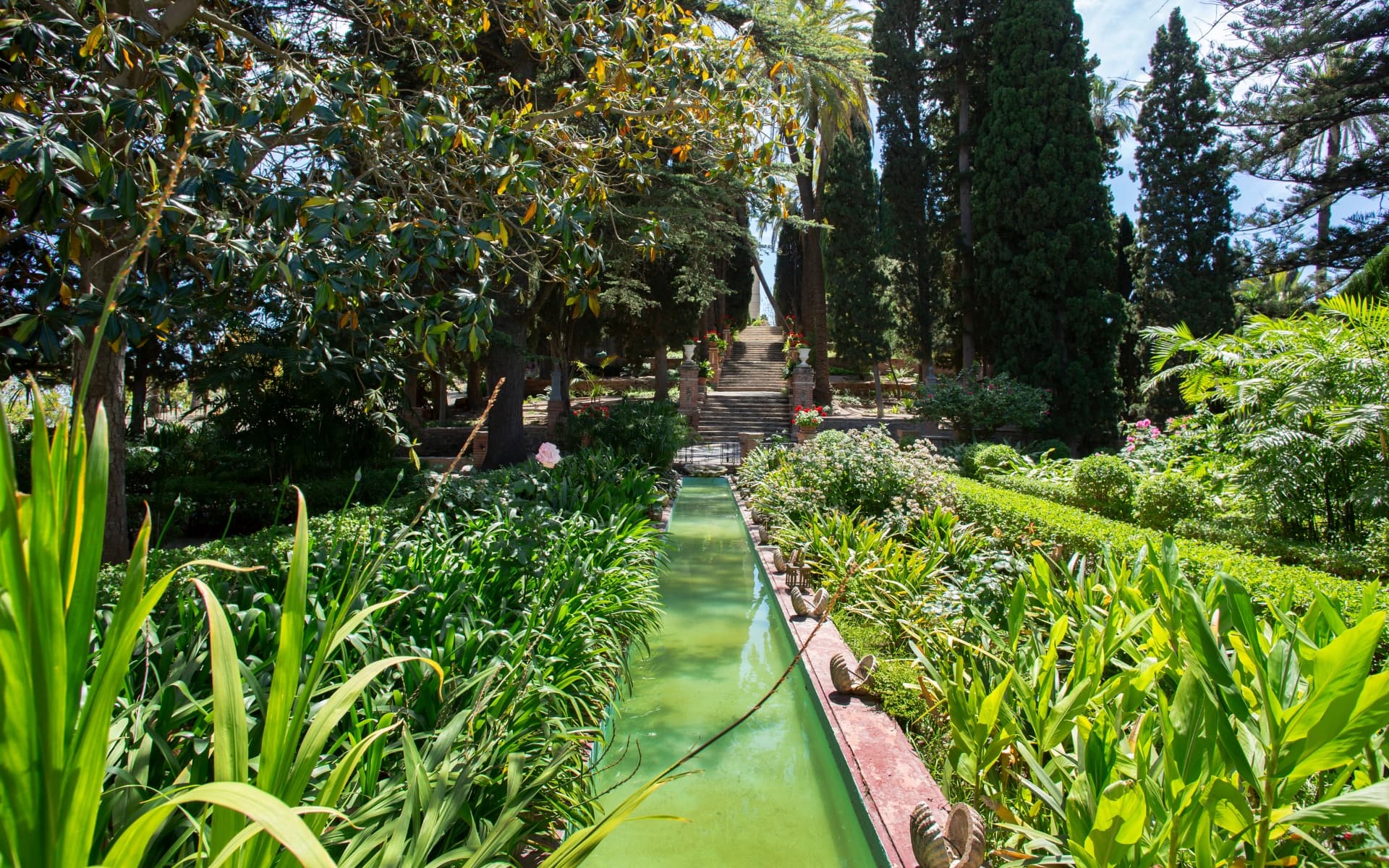
Some plants were brought by General Hernández de Velasco, hero of the Cuba War. Araucarias, magnolias, Cedar of Lebanon, century-old palm trees.
Araucarias, magnolias, a Cedar of Lebanon, cypresses, palm trees of many varieties: kentias, washingtonias, date palms, roebellini, butia capitate...
Italian Romantic Garden — 19th century
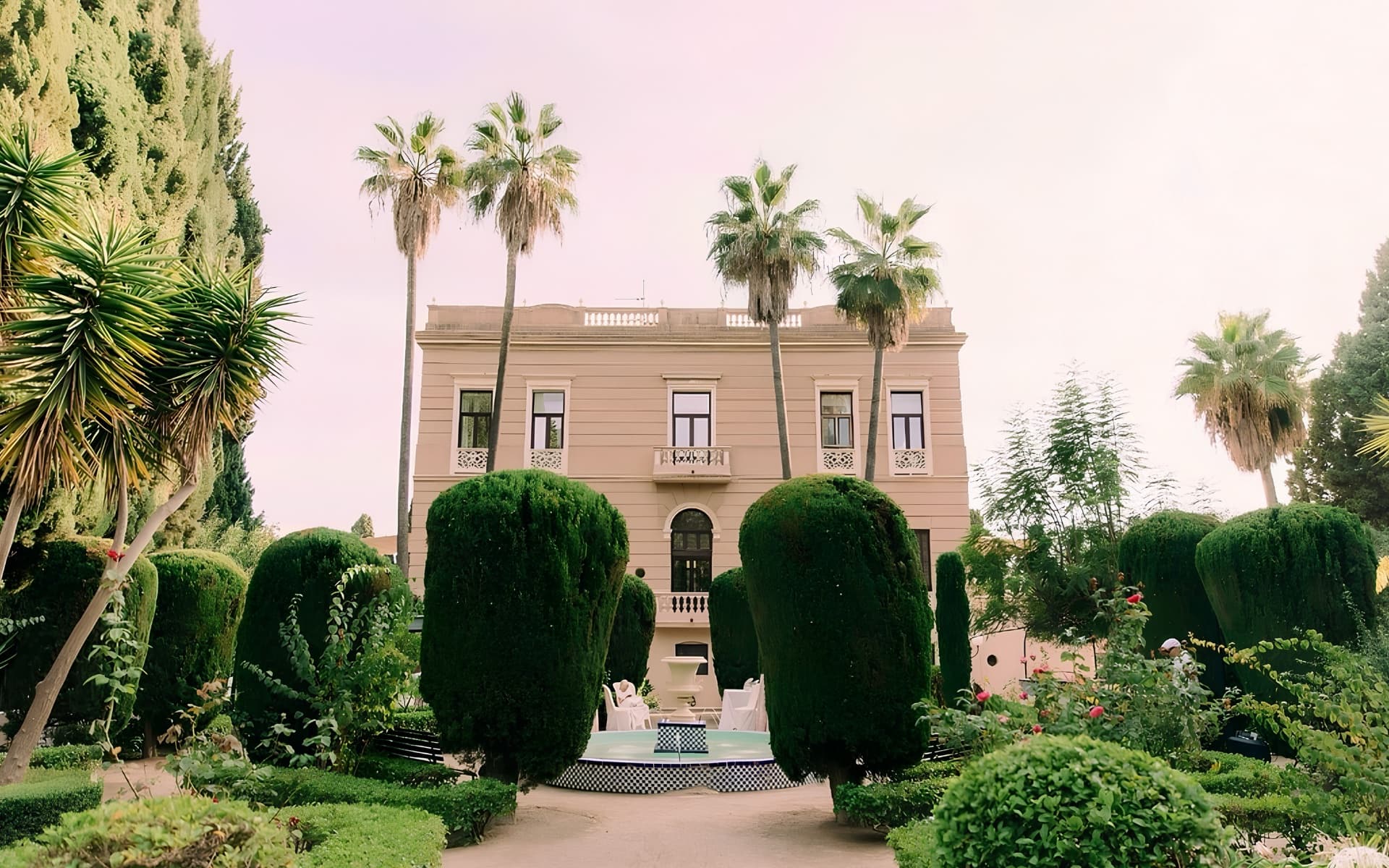
Created by José Jiménez Caballero in 1898 for his guests. Known as the Moonlight or Winter Garden. Bougainvilleas, jasmine, mock orange.
Bougainvilleas, jasmine, mock orange, gerberas and other plants that coexist with the trees, adding colour and aromas that will stay with the visitor long after they leave.
The staircase
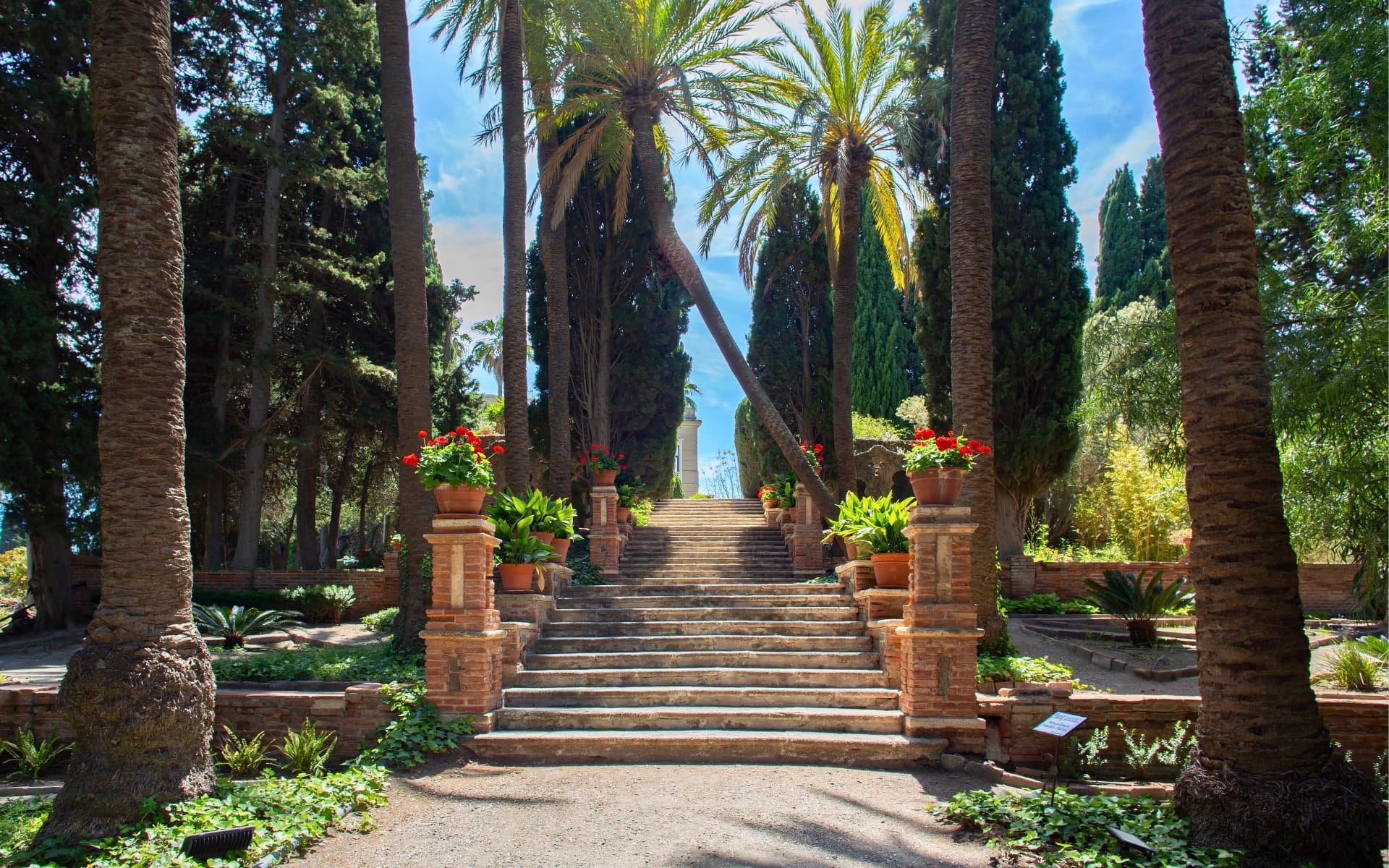
Travertine marble and coral grottos
A uniquely beautiful connection between the two gardens. Built in travertine marble and flanked by two coral grottos. Water flows through fountains that bring peace and harmony to the landscape.
Fountains that adorn the pathways and bring water as a magical element of peace and harmony. Under the magical light of Andalusia, the garden becomes the most beautiful setting for any celebration.
The manor house
An Italian-style colonial manor house built in 1898 by José Jiménez Caballero, Mayor of Motril and Member of Parliament. The ironwork is said to have been purchased from Gustave Eiffel. Listed as Civil Heritage of the City of Motril.
The spacious drawing rooms with their fireplaces are the perfect places for conversation and reading. The presence of music envelops the atmosphere in a pleasant and calm way. Various family objects integrated into the décor give the place a very personal style.
Recognition
Condé Nast · 2008
One of the 5 best guest houses in Europe
Award collected in London
Télva · 2006
One of the 10 most romantic places to marry in Spain
Our Story
A House With a Life of Its Own
Casa de los Bates was never created simply to be admired. It was a home.
Across generations, its rooms, gardens and terraces have been lived in, cared for and shared — carrying family memories alongside the older layers of history that shaped the estate.
The palacete completed in 1898, the historic gardens and the traces of Andalucía's Arab past tell one part of the story. The people who have preserved Casa, lived within its walls and passed its care from one generation to the next tell another.
Today, Casa de los Bates remains a living family estate. Its doors open to guests and celebrations, yet its character comes from something that cannot be recreated: a house with a history that has never stopped being lived.
Preserved, Not Recreated
Casa has evolved over time without losing the elements that give it its identity. Architecture, gardens, family memories and historic details coexist rather than belonging to a single period.
This continuity is what makes Casa de los Bates different from a venue created for events. The heritage was here first.
The Gardens & Orchard
The gardens and orchard are not a backdrop to Casa. They are part of its history.
Botanical and romantic in character, they unfold around the palacete through mature planting, shaded paths, terraces, orchard areas and changing views. Their beauty is found not in perfection, but in time: in the layers, scale and quiet sense of permanence that only an established estate can possess.
The Family Behind Casa
For generations, the stewardship of Casa de los Bates has meant more than maintaining a property. It has meant protecting the character of a family home and preserving it for those who come after.
Today, that same spirit of stewardship continues as Casa enters a new chapter — welcoming people from around the world while remaining unmistakably itself.
In the Press
Beyond its guests and celebrations, Casa de los Bates has drawn attention from Spanish press and media for its history, gardens and character.
Casa y Campo
Feature coverage
El País — Aguilar
National press
Ideal
Regional press
Canal Sur
Regional television